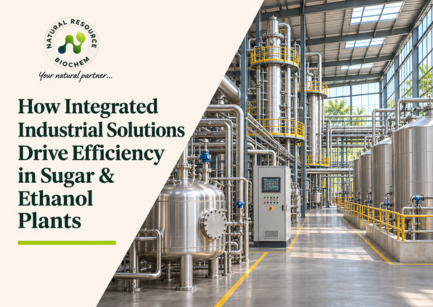
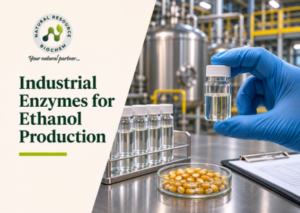
How Integrated Industrial Solutions Drive Efficiency in Sugar & Ethanol Plants
Introduction
Sugar and ethanol plants operate in highly complex, process-driven environments where efficiency, yield, and regulatory compliance directly impact profitability. With fluctuating raw material quality, stringent environmental norms, and rising operational costs, standalone solutions are no longer sufficient. This is where integrated industrial solutions play a critical role—bringing together biotechnology, process engineering, and on-ground technical support to drive measurable performance improvements.
Understanding Integrated Industrial Solutions
Integrated industrial solutions involve a holistic approach to plant operations rather than addressing isolated problems. Instead of treating fermentation, contamination control, wastewater management, and yield optimization as separate challenges, integrated solutions align these processes into a unified performance framework.
At NRBPL, this integration spans enzyme solutions, fermentation optimization, process diagnostics, contamination control, and environmental compliance—ensuring seamless coordination across plant operations.
Why Sugar & Ethanol Plants Need Integration
Raw Material Variability
Grain and molasses quality can vary significantly due to seasonal and sourcing factors. Integrated solutions adapt processes dynamically to maintain stable yields despite input variability.
Complex Fermentation Dynamics
Fermentation efficiency depends on multiple interlinked parameters such as enzyme activity, microbial health, nutrient balance, and contamination levels. Integrated monitoring ensures early detection and correction.
Environmental Compliance Pressure
Effluent treatment, COD/BOD control, and emission norms demand coordination between production and environmental systems. Fragmented approaches often lead to inefficiencies and compliance risks.
Key Benefits of Integrated Solutions
Improved sugar recovery and ethanol yield
Reduced fermentation losses and downtime
Optimized enzyme dosage and nutrient utilization
Stable plant operations across seasonal changes
Stronger compliance with environmental regulations
Real-World Impact
Plants adopting integrated industrial solutions experience improved throughput, lower operational variability, and enhanced long-term stability. By aligning biological performance with mechanical and environmental systems, plants move from reactive problem-solving to proactive optimization.
Conclusion
Integrated industrial solutions are no longer optional for sugar and ethanol plants aiming for sustainable growth. By combining biotechnology, process intelligence, and technical expertise, NRBPL enables plants to achieve consistent performance, regulatory confidence, and improved profitability in an increasingly competitive landscape.