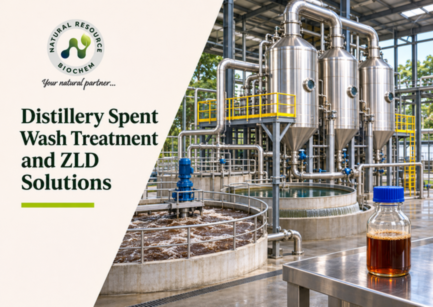
Distillery wastewater management is among the most demanding environmental challenges faced by the sugar and ethanol industry. Molasses-based distilleries generate spent wash containing high concentrations of organic matter, dissolved solids, colour and other constituents.
Effective treatment is essential for environmental protection, resource recovery and compliance with applicable pollution-control requirements.
Why is distillery spent wash difficult to treat?
The characteristics of spent wash vary depending on feedstock, fermentation efficiency and distillation operations. However, high COD, high BOD, acidic pH, colour and elevated dissolved solids are common challenges.
Such characteristics require a treatment strategy specifically designed for the wastewater stream rather than a conventional domestic wastewater treatment approach.
Key stages in spent wash management
1. Characterisation and monitoring: Analyse COD, BOD, pH, TDS, suspended solids and other relevant parameters.
2. Biomethanation: Anaerobic treatment can convert a portion of biodegradable organic matter into biogas, supporting energy recovery.
3. Evaporation and concentration: Appropriate evaporation systems help concentrate spent wash and recover water.
4. Final residue management: Depending on the approved plant design and applicable requirements, the concentrated stream may undergo bio-composting or incineration-based management.
5. Condensate treatment: Appropriate treatment and monitoring are required before reuse or other authorised management.
Understanding Zero Liquid Discharge
ZLD involves managing liquid effluent streams so that liquid discharge from the defined process boundary is eliminated. Achieving this requires an integrated treatment, recovery and residue-management strategy.
Indian regulatory guidance addresses spent wash management, water recovery, monitoring and ZLD requirements in the distillery sector.
Conclusion
Effective distillery wastewater management is not simply a compliance requirement. It is an opportunity to improve water utilisation, recover energy and strengthen environmental performance.
NRBPL’s Environmental & Sustainability services focus on supporting industries through technical assessment, wastewater monitoring and environmental solutions.